


Description
Your Body Works Hard. Your Recovery System Should Too.
Long days. Heavy work. Repetitive movement. Awkward positions. Heat, pressure, deadlines and physical fatigue.
When your body spends enough time under load, tension can become the default. Your jaw stays tight. Your shoulders remain braced. Your breathing becomes shorter and faster. You finish work, but your body doesn’t necessarily get the message that the work is over.
Structural Resilience is an 8-week interactive breathwork system built for people whose work places real demands on their body.
Instead of generic relaxation exercises, it gives you a progressive breathing practice built around physical readiness, respiratory control, CO₂ tolerance and muscular bracing.
The program itself targets the cycle between shallow breathing, sympathetic activation, muscular bracing and restricted movement.
Start With Your Own Baseline
You don’t begin by guessing what you need.
Structural Resilience starts by measuring where you’re at.
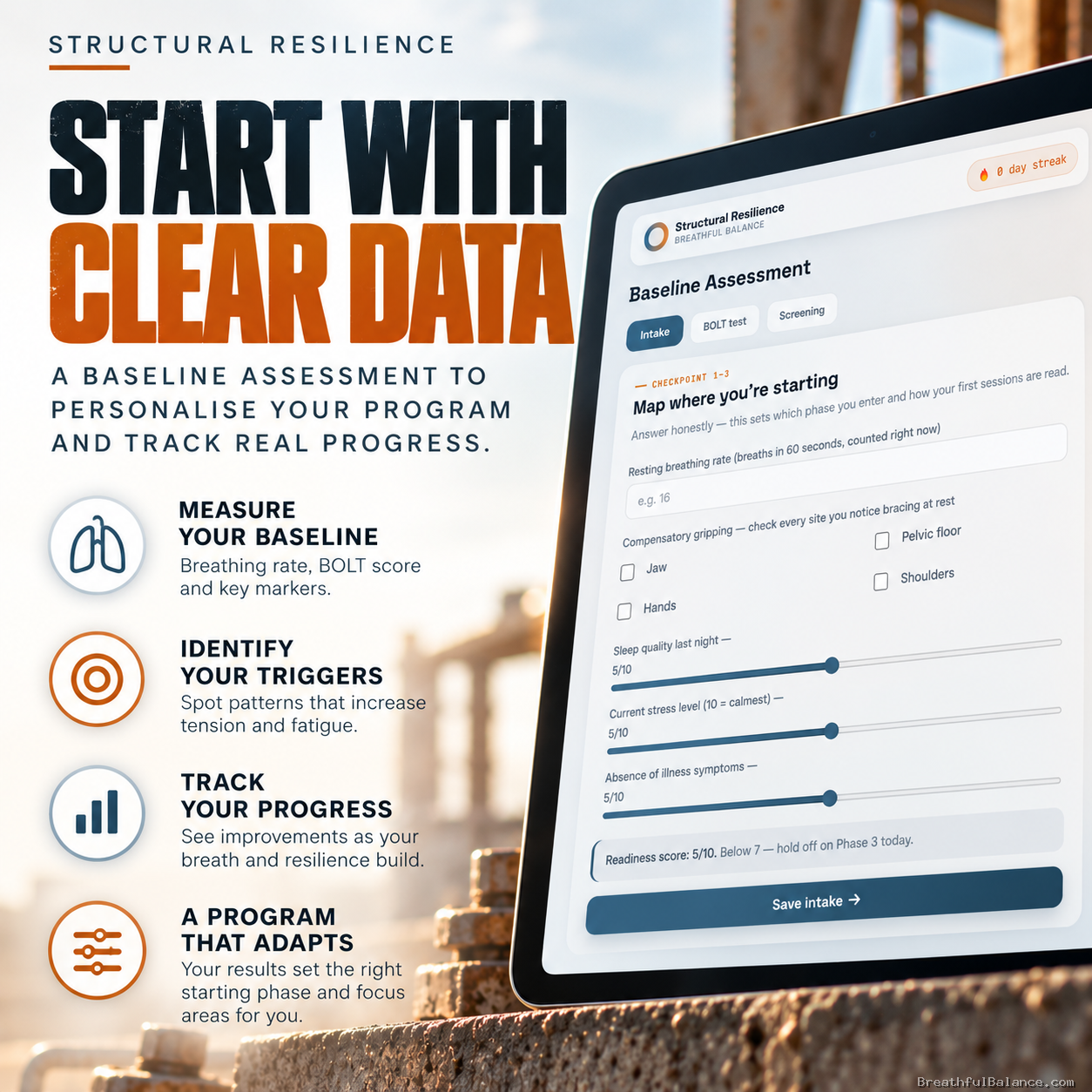
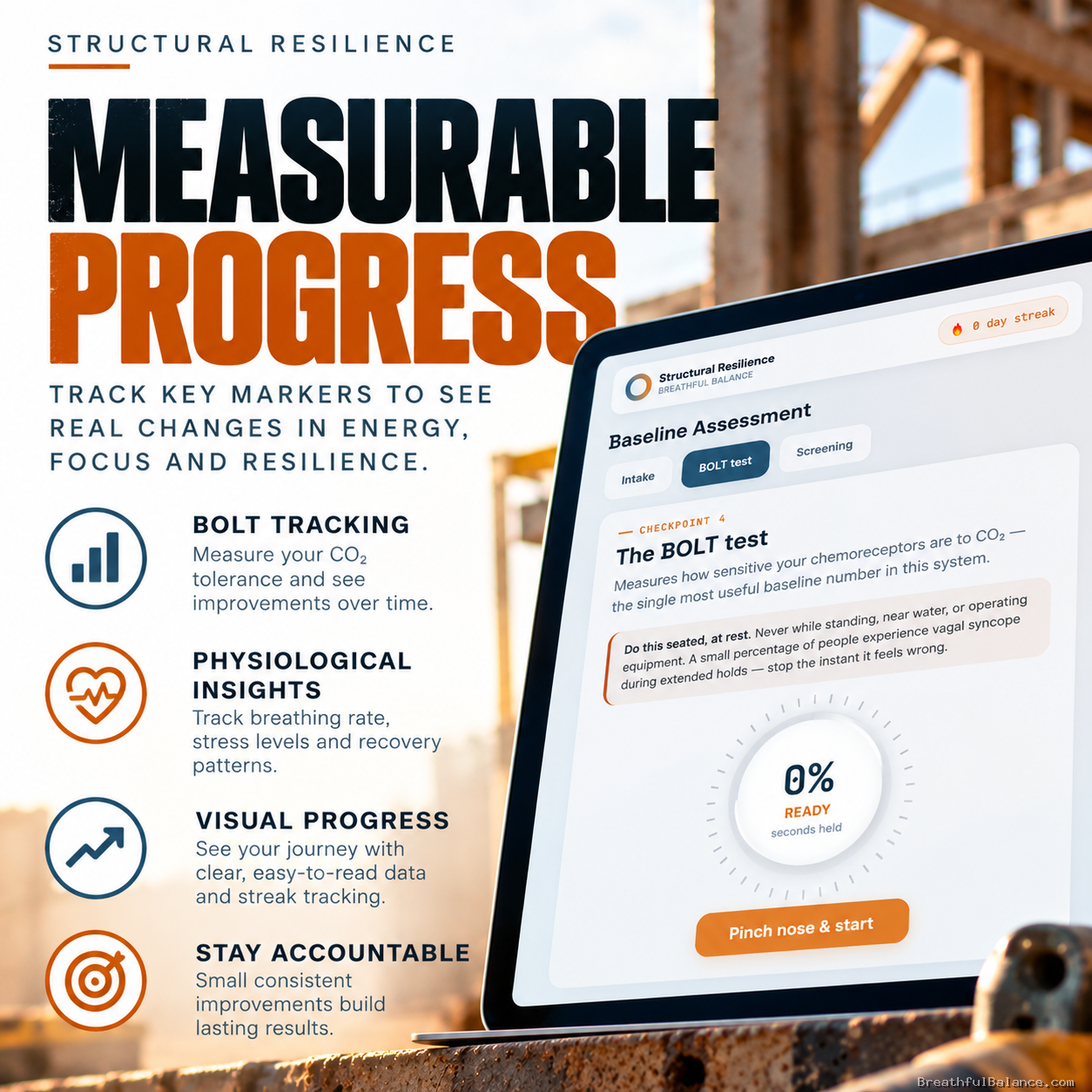
The interactive assessment records your resting breathing rate, areas where you notice yourself gripping or bracing, sleep, stress and general readiness. You’ll also complete a built-in BOLT test to establish your current CO₂ tolerance.
That gives you an actual starting point before you begin training.
Four Progressive Phases
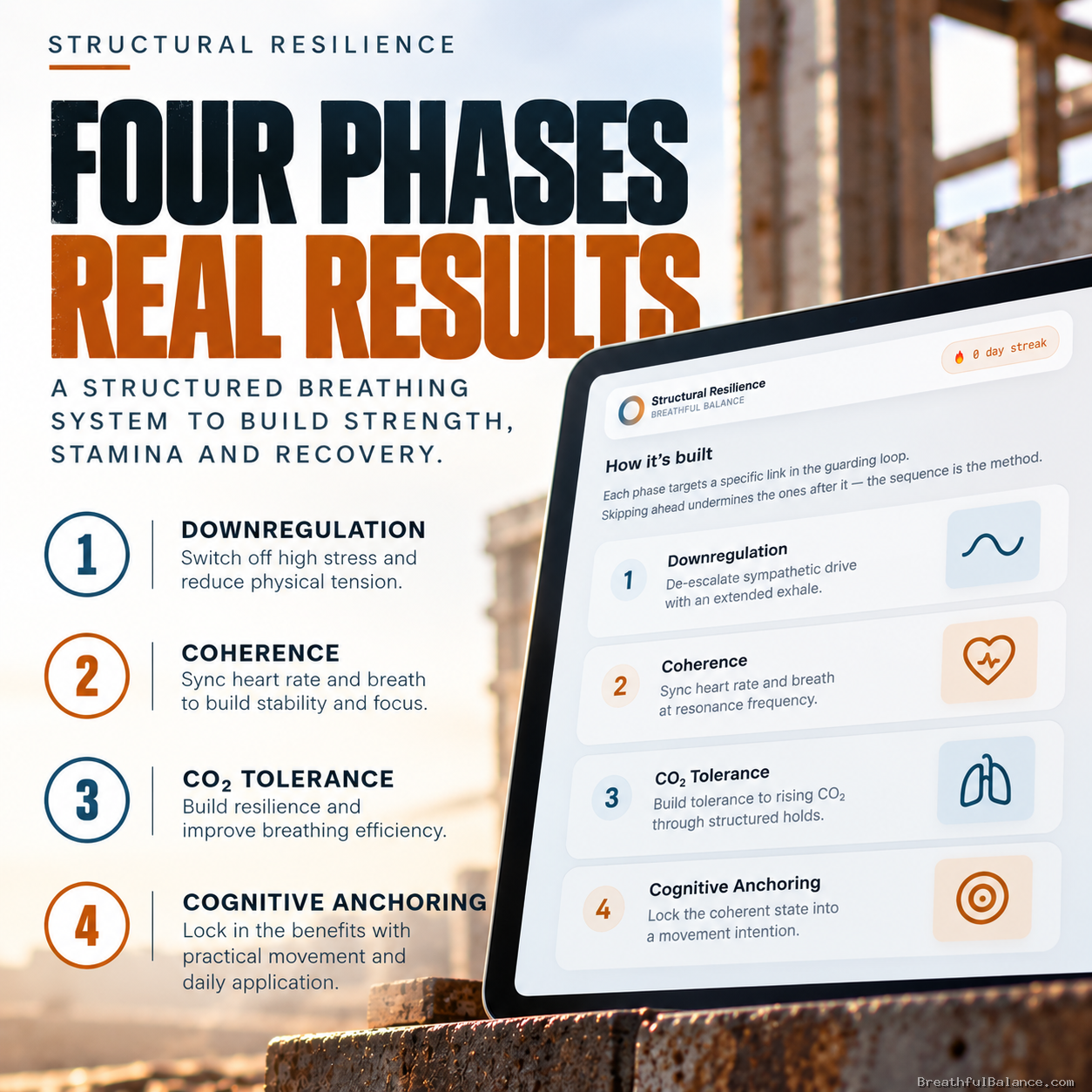
The system then takes you through four stages:
1. Downregulation
Use controlled extended-exhale breathing to practise shifting out of a highly activated state after physical or mental pressure.
2. Coherence
Train slower, controlled nasal breathing using a built-in breathing pacer and structured 5:5 breathing pattern.
3. CO₂ Tolerance
Progress into structured breath-hold training designed to build tolerance to rising CO₂ without preparatory hyperventilation.
4. Cognitive Anchoring
Combine breathing with movement intentions so the practice isn’t isolated from the way you actually use your body.
The sequence is deliberate: each phase builds on the previous one rather than throwing unrelated breathing exercises at you.
Designed to Fit Around Real Work
You don’t need an hour-long wellness routine.
The core guided sessions are short. Phase 1 takes approximately 2–4 minutes, Phase 2 approximately 3–5 minutes, and the later phases introduce more specialised training as you progress.
That makes Structural Resilience practical for use before work, after a demanding day, during recovery time or as part of an existing training routine.
Built-In Guidance — Not Just Instructions
You aren’t handed a PDF and expected to time everything yourself.
Structural Resilience includes interactive breathing pacers, timers and progression tools that guide you through the exercises directly inside the program.
You’ll work through controlled breathing patterns, structured CO₂ tables and progression checkpoints while the system keeps the practical components together in one place.
See Whether You’re Actually Progressing
Physical resilience isn’t something you should have to judge entirely by feel.
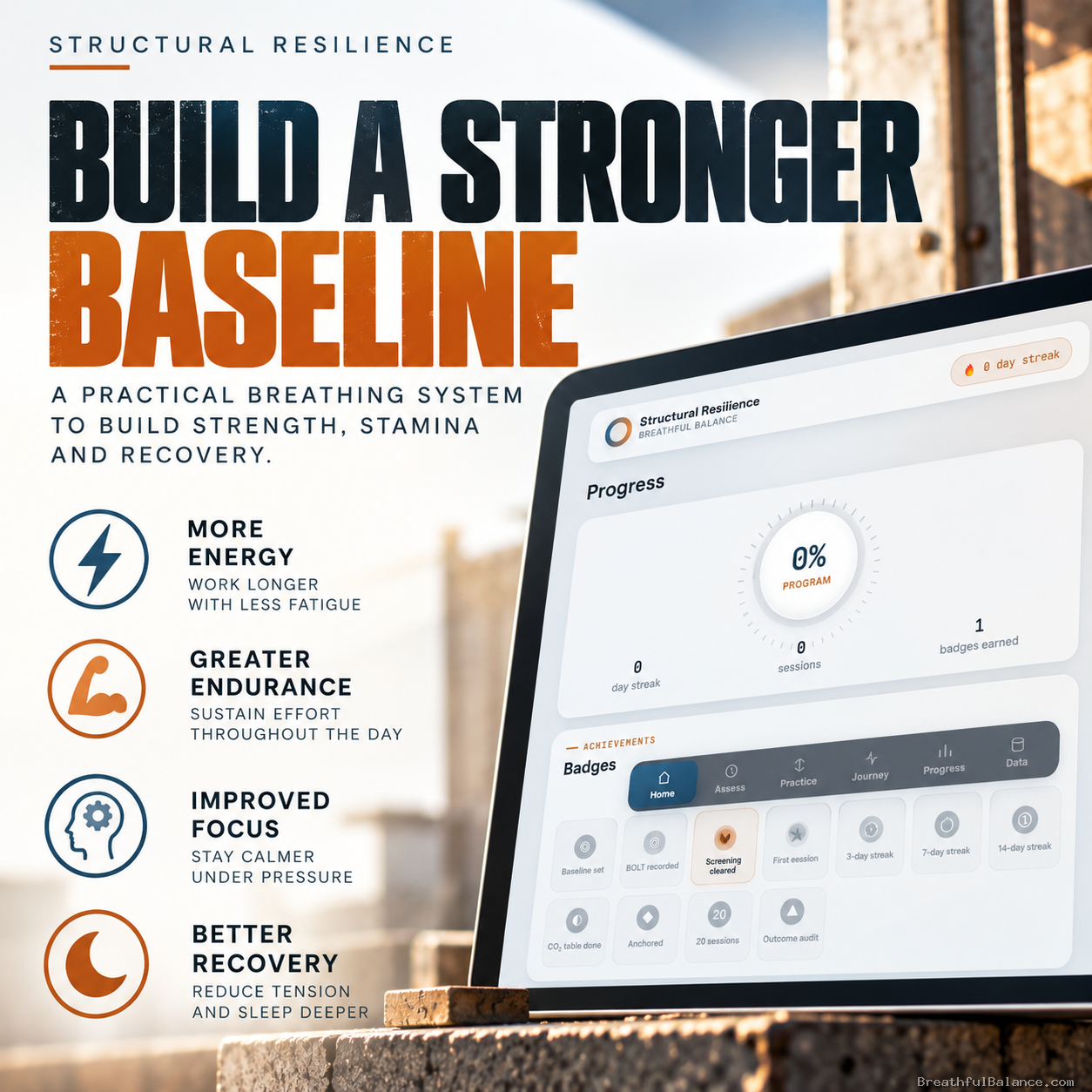
Structural Resilience tracks your sessions, current program progress, streak and achievements. You can also record readiness, BOLT scores, areas of muscular guarding and notes about what you’re noticing.
At Week 8, you’ll complete an Outcome Audit, comparing your current BOLT score with your original baseline and recording whether movements that previously triggered guarding feel different. Built for People Who Need Their Body to Perform
Structural Resilience isn’t about turning your working day into a wellness retreat.
It’s for people who need to work, lift, move, concentrate, recover and come back again tomorrow.
Whether you’re on the tools, on site, working a physically demanding job, training outside work or simply spending your days putting your body under load, Structural Resilience gives you a structured way to train something most people completely ignore:
how you breathe while your body deals with pressure.

Reviews
There are no reviews yet.