
Welcome to the New Standard of Breathwork
The Science of High Performance, State Regulation, and Respiratory Mechanics
Optimize Your Autonomic Operating System
Most productivity frameworks treat your life like a quarterly business ledger: maximizing throughput while forcing a single area to bear all the weight
The result isn't sustainable strength—it is structural lopsidedness
Your body registers this chronic pressure long before your mind can even name it.
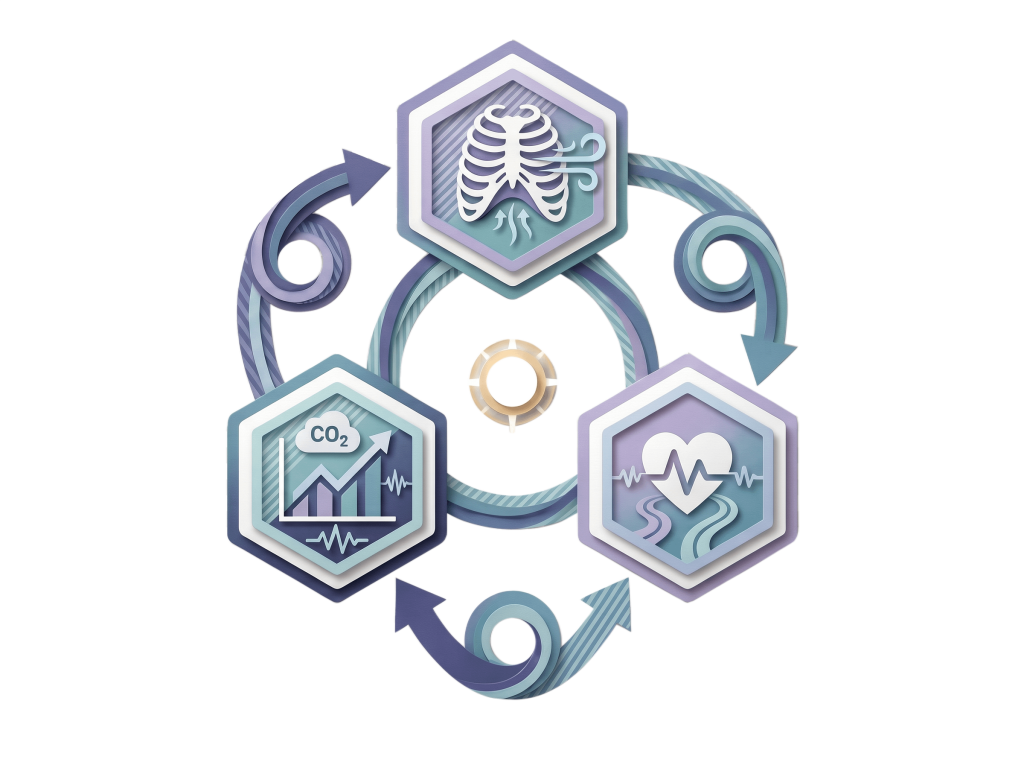
The Three Pillars of Our Methodology
You cannot reliably coach elite cognitive or physical outcomes if your client’s breathing hardware is fundamentally dysfunctional. We assess and rebuild foundational diaphragmatic mechanics to eliminate upper-chest breathing compensation and accessory muscle strain.
Latest Articles
Why Deep Breaths Don’t Calm You Down: CO₂ Tolerance Explained
A deep breath under stress often backfires. Learn how CO₂…
Air Hunger: How CO₂ Sensing Drives Your Stress Response
That tight-chested, can’t-catch-my-breath feeling often comes from CO₂ sensing, not…
The Oxygen Paradox: Normal Blood Oxygen, Foggy Brain
A normal SpO₂ reading doesn’t tell you how much oxygen…
The Bohr Effect: Why Breathing Less Can Sharpen Your Brain
Big breaths can reduce oxygen delivery to your brain. Learn…
The Lopsided Life: Why Trying Harder Stops Working
Teachers, nurses, tradespeople, shift workers — the people carrying the…